The beauty and personal care industry is growing faster than ever, creating exciting opportunities for entrepreneurs to launch skincare, haircare, and cosmetic brands. However, one of the biggest decisions every founder faces is choosing between Private Label vs Third Party Manufacturing.
Both models help businesses enter the market without building a factory, but they work differently and suit different business goals.
If you're planning to launch your own cosmetic brand in India, understanding the difference between private label and third-party manufacturing can help you save time, reduce costs, and build a stronger brand.
At Dr. HealthScot Unlimited, we work with startups, salons, retailers, and growing beauty brands to turn product ideas into market-ready cosmetic solutions.
What is Private Label Manufacturing?
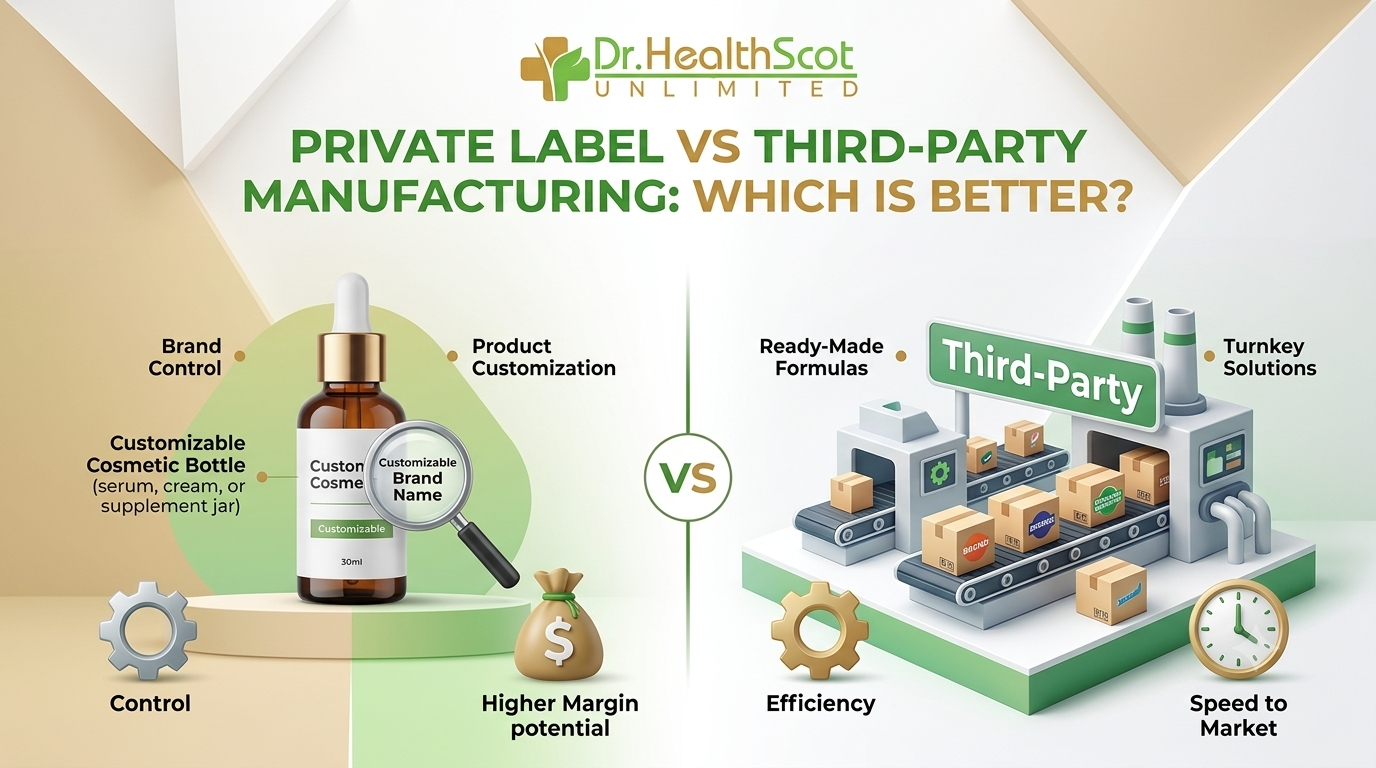
Private label manufacturing is a business model where a manufacturer produces ready-made cosmetic products that businesses sell under their own brand name.
Instead of creating a new formula from scratch, you choose from existing formulations and customize elements like:
-
Brand name
-
Logo
-
Packaging
-
Labels
-
Product design
This allows businesses to launch products quickly while focusing on branding and marketing.
Examples of Private Label Products
-
Face Wash
-
Shampoo
-
Body Lotion
-
Hair Serum
-
Beard Oil
-
Face Cream
Private label is especially popular among:
-
Beauty startups
-
Salon brands
-
E-commerce sellers
-
Retail stores
-
Influencers launching skincare brands
What is Third-Party Manufacturing?
Third-party manufacturing is a broader manufacturing partnership where a company manufactures products on behalf of your brand according to agreed specifications.
Unlike private label, third-party manufacturing often provides greater flexibility, including:
-
Custom formulations
-
Product development
-
Ingredient selection
-
Packaging assistance
-
Regulatory compliance
-
Large-scale production
This model gives businesses more control over their products while eliminating the need to invest in expensive manufacturing facilities.
At Dr. HealthScot Unlimited, third-party manufacturing allows brands to focus on growth while experienced professionals handle production.
Private Label vs Third Party Manufacturing: Key Differences
|
Feature |
Private Label |
Third-Party Manufacturing |
|---|---|---|
|
Product Formula |
Existing |
Existing or Custom |
|
Branding |
Yes |
Yes |
|
Custom Ingredients |
Limited |
Extensive |
|
Product Development |
Minimal |
Comprehensive |
|
Packaging Support |
Yes |
Yes |
|
Production Scale |
Small to Medium |
Small to Large |
|
Time to Market |
Faster |
Moderate |
|
Brand Differentiation |
Moderate |
High |
The biggest difference is flexibility.
Private label prioritizes speed, while third-party manufacturing focuses on customization and long-term brand growth.
When Should You Choose Private Label?
Private label is ideal if your goal is launching quickly with minimal complexity.
Choose private label if you:
-
Want to launch within weeks.
-
Have a limited budget.
-
Need proven formulations.
-
Are testing a new business idea.
-
Sell through Amazon, Flipkart, or Shopify.
Advantages
Lower Initial Investment
Since formulations already exist, development costs are significantly lower.
Faster Launch
Products can reach the market much sooner than custom-developed alternatives.
Reduced Risk
Using tested formulations reduces uncertainty during product launch.
When Should You Choose Third-Party Manufacturing?
Third-party manufacturing is better for brands planning long-term growth.
Choose this model if you:
-
Want unique products.
-
Need custom ingredients.
-
Plan nationwide expansion.
-
Want premium positioning.
-
Require larger production volumes.
Advantages
Custom Formulations
Your products become more unique, helping differentiate your brand.
Better Brand Identity
Exclusive formulations make it harder for competitors to offer identical products.
Scalability
As demand grows, production can increase without investing in factory infrastructure.
Cost Comparison
One of the most common questions entrepreneurs ask is which option is more affordable.
Private Label
Costs generally include:
-
Product selection
-
Branding
-
Labels
-
Packaging
There are fewer development expenses.
Third-Party Manufacturing
Additional costs may include:
-
Research & Development
-
Custom formulation
-
Ingredient sourcing
-
Regulatory processes
-
Specialized packaging
Although the initial investment can be higher, the long-term branding advantages often outweigh the difference.
Which Option is Better for Startups?
Many startups assume building their own factory is the only way to create a premium brand.
In reality, experienced manufacturers allow founders to invest more in:
-
Marketing
-
Customer acquisition
-
Brand building
-
Product expansion
Instead of spending heavily on machinery, licenses, and production facilities, businesses can focus on growing sales.
For many emerging beauty brands, third-party manufacturing provides the strongest balance between flexibility and scalability.
Why More Brands Are Choosing Third-Party Manufacturing
Today's beauty brands compete through innovation rather than infrastructure.
Manufacturing partners now provide:
-
Quality-controlled production
-
Professional packaging
-
Industry expertise
-
Compliance support
-
Flexible production capacity
This allows entrepreneurs to operate like established brands without owning expensive production facilities.
As consumer expectations continue rising, working with experienced manufacturers becomes a strategic advantage.
How Dr. HealthScot Unlimited Supports Growing Brands
At Dr. HealthScot Unlimited, we help businesses move from concept to market-ready products through reliable manufacturing partnerships.
Our solutions include:
-
Third-party cosmetic manufacturing
-
Private label manufacturing
-
Custom product development
-
Packaging support
-
Quality-focused production
-
Scalable manufacturing solutions
Whether you're launching your first skincare product or expanding an established brand, choosing the right manufacturing model can accelerate your business growth.
Which Option Should You Choose?
The answer depends on your business goals.
Choose Private Label if you want:
-
Quick launch
-
Lower investment
-
Ready-made products
-
Easy branding
Choose Third-Party Manufacturing if you want:
-
Unique formulations
-
Strong brand differentiation
-
Long-term scalability
-
Greater product customization
Many successful cosmetic brands begin with one model and expand as their business grows.
The key is choosing a manufacturing partner that understands your vision and supports your growth journey.
Conclusion
The debate around Private Label vs Third Party Manufacturing isn't about finding one universal winner—it's about choosing the model that aligns with your brand's goals.
If speed and simplicity matter most, private label offers an excellent starting point.
If you're building a long-term beauty brand with unique products and scalable growth plans, third-party manufacturing often provides greater flexibility and competitive advantage.
At Dr. HealthScot Unlimited, we're committed to helping brands launch confidently through trusted cosmetic manufacturing solutions designed for today's growing beauty industry.
Frequently Asked Questions (FAQs)
1. What is the difference between Private Label and Third-Party Manufacturing?
Private label uses existing product formulations under your brand, while third-party manufacturing offers greater flexibility, including custom formulations and product development.
2. Which is better for startups?
Startups focused on long-term brand growth often benefit from third-party manufacturing, while businesses seeking faster launches may prefer private label solutions.
3. Is third-party manufacturing more expensive?
It can involve additional development costs, but it also offers greater customization and scalability for growing brands.
4. Can I create my own formula with third-party manufacturing?
Yes, many third-party manufacturers support custom formulation and product development based on your requirements.
5. Is private label faster than third-party manufacturing?
Yes. Since private label products already exist, businesses can typically launch more quickly.
6. Which model offers better brand differentiation?
Third-party manufacturing generally provides stronger differentiation through unique formulations and customized products.
7. Do both options allow custom branding?
Yes. Both private label and third-party manufacturing allow businesses to use their own brand name, logo, and packaging.
8. Who should choose private label manufacturing?
Private label is suitable for beauty startups, salon brands, online sellers, retailers, and entrepreneurs looking for a faster market entry.
9. Can I scale my business with third-party manufacturing?
Yes. Third-party manufacturing is designed to support businesses as production requirements grow over time.
10. Why choose Dr. HealthScot Unlimited?
Dr. HealthScot Unlimited provides trusted third-party and private label cosmetic manufacturing solutions, helping brands launch high-quality products with professional support, packaging assistance, and scalable production capabilities.