
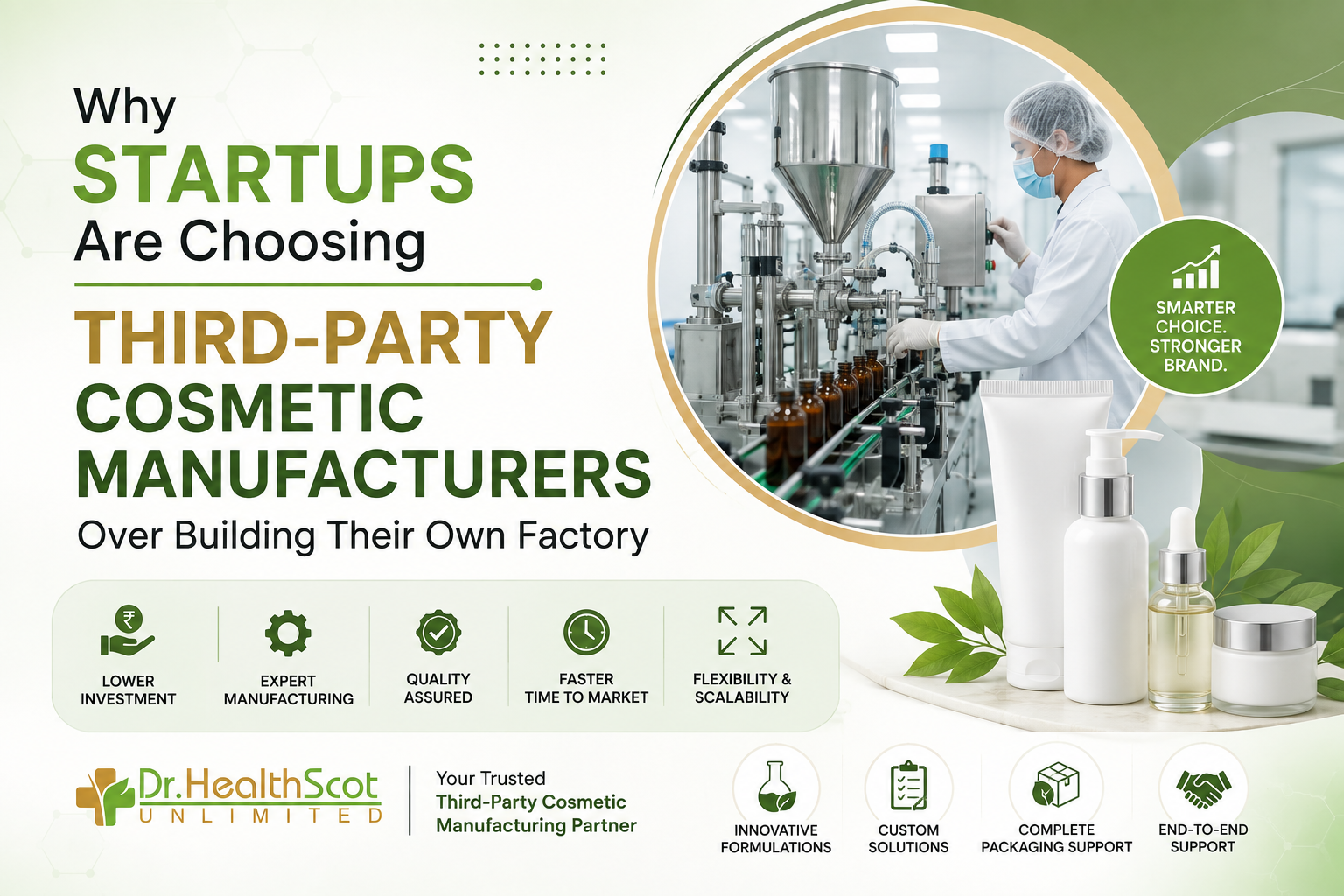
The beauty and personal care industry is booming, and so is the number of entrepreneurs trying to break into it. From Instagram-first skincare labels to wellness-focused haircare brands, new names are popping up every week. But behind almost every successful new cosmetic brand today lies a decision most founders make early on: build a factory, or partner with a third-party cosmetic manufacturer?
Increasingly, the answer is clear. Startups across India and beyond are choosing third-party cosmetic manufacturing over setting up their own production units — and for good reason. Let's break down exactly why this model has become the go-to strategy for new-age beauty brands.
1. Lower Startup Costs, Faster Market Entry
Setting up an in-house cosmetic manufacturing facility isn't cheap. Between machinery, raw material sourcing, GMP-compliant infrastructure, licensing, and skilled labor, the initial investment can run into crores of rupees before a single product ships.
Third-party manufacturing flips this equation. Instead of sinking capital into infrastructure, startups can channel their budget into product development, branding, and marketing — the areas that actually drive customer acquisition and revenue. This is one of the biggest reasons private label cosmetics manufacturing in India has become such a popular route for D2C (direct-to-consumer) beauty brands.
With a reliable cosmetic third-party manufacturer, a founder can go from idea to a market-ready product in a matter of weeks instead of months, dramatically shortening the path to launch.
2. Access to Established Infrastructure and Expertise
Building an ISO-certified, GMP-compliant, FDA-approved manufacturing unit from scratch takes years of investment and regulatory navigation. Established cosmetic manufacturing companies already have this infrastructure in place — along with R&D teams, formulation chemists, and quality control systems that would take a new brand years to replicate.
This means startups instantly gain access to:
- Advanced formulation labs for skin care, hair care, personal care, and derma products
- Quality assurance systems that meet international compliance standards
- Experienced chemists who can fine-tune formulas for specific skin and hair concerns
- Scalable production lines that grow with demand
This is particularly valuable for founders who understand branding and customer experience but don't have a background in cosmetic chemistry or manufacturing operations.
3. Focus on Core Strengths: Branding and Marketing
Every founder has limited time and energy. The brands that scale fastest are usually the ones that stay laser-focused on what they do best — building a compelling brand story, running performance marketing, and creating a loyal customer base.
By outsourcing production to a private label manufacturer, startups free themselves from the operational burden of running a factory: managing raw material supply chains, machinery maintenance, staffing production lines, and navigating manufacturing compliance. This lets founders redirect their energy toward:
- Brand identity and packaging design
- Social media and influencer marketing
- Customer acquisition and retention strategies
- Expanding into new product categories
In a market where brand differentiation matters more than ever, this trade-off makes complete sense.
4. Flexibility to Experiment and Scale
One of the underrated advantages of third-party cosmetic manufacturing is flexibility. Startups can test multiple product concepts — say, a new face serum, a sulfate-free shampoo, or an organic body lotion — without committing to expensive dedicated machinery for each product line.
If a product doesn't perform well in the market, the brand isn't stuck with idle equipment or unused raw materials. If a product takes off, production can scale up quickly through the manufacturer's existing capacity. This agility is critical in the fast-moving beauty industry, where trends (think skincare-as-self-care, clean beauty, or gender-neutral grooming) shift rapidly and consumer preferences evolve just as fast.
5. Reduced Risk and Regulatory Compliance
Cosmetic manufacturing in India is governed by a web of regulations — from Drug & Cosmetic licensing to labeling requirements and safety testing. Non-compliance can lead to costly delays, product recalls, or legal complications.
Reputable third-party manufacturers already operate within these regulatory frameworks. Working with a manufacturer that holds credentials like GMP certification, ISO 9001:2015 certification, and adheres to FDA-aligned quality standards significantly reduces the compliance burden on a new brand. This is especially important for startups entering the clean beauty and organic cosmetics space, where ingredient transparency and safety claims are under increasing consumer and regulatory scrutiny.
6. Access to Trending, Consumer-Demanded Formulations
Today's consumers are ingredient-conscious. Keywords like paraben-free, sulfate-free, cruelty-free, vegan cosmetics, silicone-free, and 100% natural aren't just marketing buzzwords — they're genuine purchase drivers. Established cosmetic third-party manufacturing companies stay ahead of these trends, continuously updating their ingredient libraries and formulation capabilities to match what the market wants.
For a startup, this means instant access to trending formulations — think niacinamide serums, hyaluronic acid moisturizers, ceramide-based creams, and sulfate-free shampoos — without having to invest years into R&D themselves.
7. Customized Packaging and Branding Support
Building a brand isn't just about the product inside the bottle — packaging plays a massive role in shelf appeal and brand recall. Many private label cosmetic manufacturers offer in-house packaging design support, helping startups create a distinctive, market-ready look without hiring a separate design agency or sourcing packaging vendors independently.
This bundled approach — formulation, manufacturing, and packaging under one roof — is a major time-saver for lean startup teams juggling multiple priorities at once.
8. Faster Path to Profitability
At the end of the day, every startup decision comes down to one question: does this help us reach profitability faster? Third-party manufacturing typically involves lower fixed costs, since brands pay per batch or per order rather than carrying the overhead of an entire factory — machinery depreciation, staff salaries, utility costs, and maintenance.
This leaner cost structure allows new cosmetic brands to price competitively, test the market without excessive financial risk, and reinvest profits into growth rather than infrastructure.
The shift toward third-party cosmetic manufacturing isn't a passing trend — it reflects how the beauty industry itself is evolving. Modern startups want to move fast, stay lean, and focus on what actually builds a brand: product quality, storytelling, and customer trust. Manufacturing infrastructure, compliance, and formulation expertise are increasingly things brands rent, not own.
For founders looking to launch a skincare, haircare, personal care, or derma brand without the capital burden of building a factory, partnering with an experienced cosmetic third-party manufacturer in India offers a faster, safer, and more scalable path to market — letting the manufacturing experts handle production while the brand focuses on what it does best: connecting with customers.
Looking to launch your own cosmetic brand? Partnering with an experienced third-party manufacturer could be the smartest first step you take.